


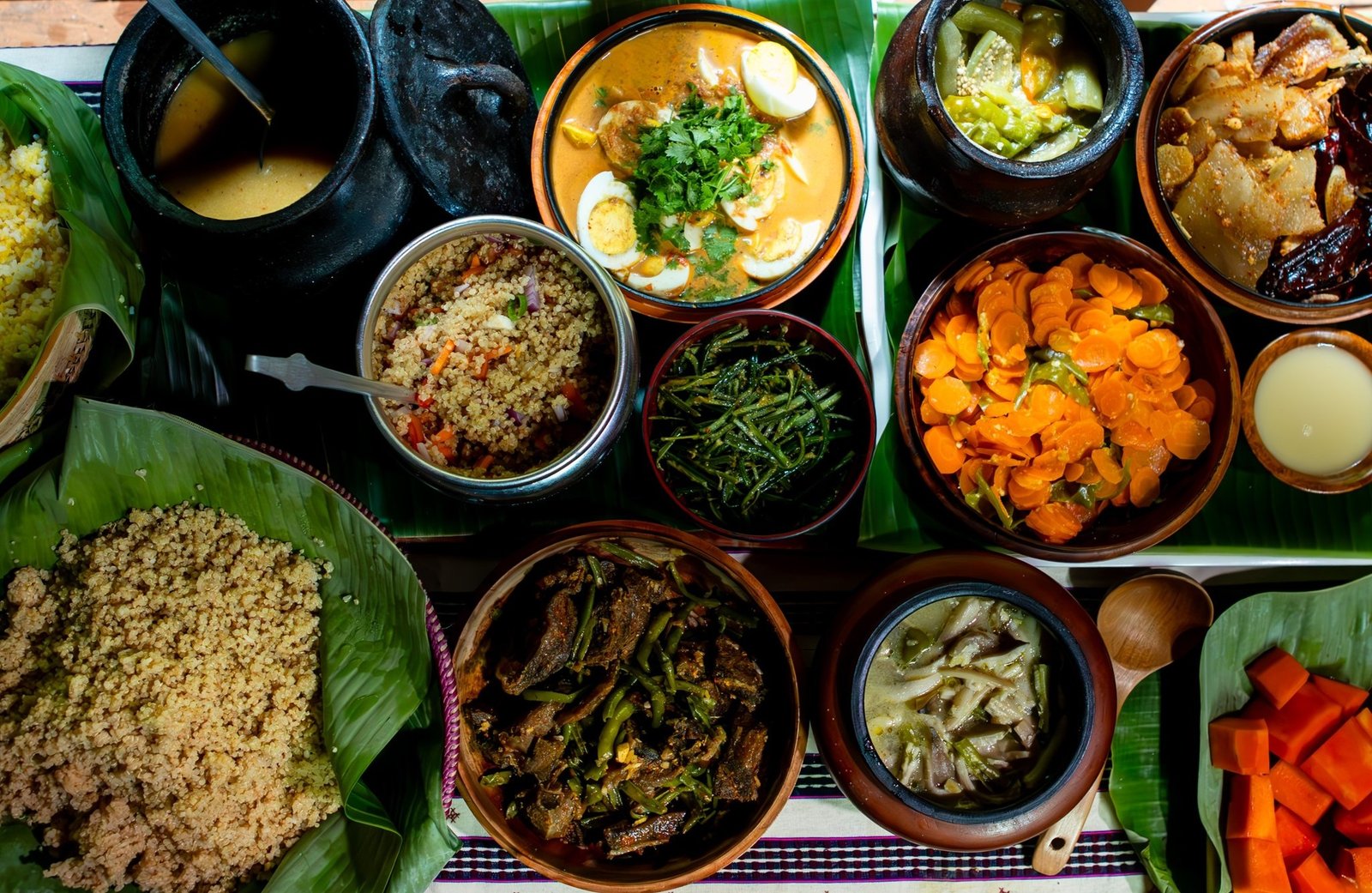
A Guide to Bhutanese Food Every Traveller Should Try
Bhutanese food rarely gets the attention it deserves, overshadowed by the country's monasteries and mountain views. But eating your way through Bhutan is one of the most direct ways to understand its culture — a cuisine built on chillies, cheese, buckwheat, and rice, shaped by a cold climate and a farming way of life that has changed little for generations. Here's what to look out for on your plate.
Ema Datshi: The National Dish
Ema datshi is chillies stewed in a thick sauce of local farmhouse cheese, and it appears at nearly every Bhutanese meal. In Bhutan, chillies are treated as a vegetable rather than just a seasoning, so this dish is genuinely spicy — not a token garnish. If you have a low tolerance for heat, ask your guide or hotel kitchen to prepare a milder version; most places are happy to adjust for travellers.
Datshi Variations
Cheese and chilli form the base of many Bhutanese dishes, with the chilli sometimes swapped or supplemented for other ingredients:
- Kewa datshi — potatoes in cheese sauce, gentler on the palate than ema datshi
- Shamu datshi — mushrooms in cheese sauce, especially good when wild mushrooms are in season
- Ezay — a chilli-based condiment or relish, often served on the side rather than as a main dish
Rice, Noodles, and Grains
Bhutanese red rice is the everyday staple in most of the country — nuttier and chewier than white rice, and grown at altitudes few other rice varieties tolerate. In the higher, colder regions of Bumthang and Haa, buckwheat takes over from rice. Look for puta (buckwheat noodles) and khuli (buckwheat pancakes), which are regional specialities worth trying if your itinerary takes you to central or western Bhutan.
Meat Dishes
Meat is eaten in Bhutan, though less frequently and in smaller quantities than in many other cuisines, partly due to Buddhist values around taking life. Common dishes include:
- Phaksha paa — pork cooked with dried red chillies and radish or spinach
- Jasha maru — a spicy, tomato-based minced chicken dish
- Sikam paa — dried, fatty pork, often stir-fried with chillies and radish
Momos, the steamed or fried dumplings found across the Himalayas, are also widely available in Bhutan, filled with cheese, pork, beef, or vegetables.
Drinks
Suja, or butter tea, is salty rather than sweet and made with tea leaves, butter, and salt. It's an acquired taste for most first-time visitors, but worth trying at least once — it's traditionally served to guests as a gesture of hospitality. Ara, a home-distilled spirit made from rice, maize, or wheat, is another local tradition, often offered during festivals and family gatherings in rural homes.
Where and How to Try Bhutanese Food
Many hotels catering to international travellers offer a mix of Bhutanese, Indian, and continental dishes, since not every visitor is ready for a full week of chilli-forward meals. If you want a more authentic experience, ask your tour operator about arranging a meal in a local farmhouse, which is often possible to build into an itinerary and gives a much closer look at how Bhutanese families actually cook and eat day to day.
A Few Practical Tips
- Spice levels can be intense by most international standards — don't hesitate to ask for a milder version of a dish
- Meals are typically eaten with rice as the base, with two or three side dishes shared across the table
- Vegetarian travellers are generally well catered for, since datshi dishes and vegetable curries are core to the cuisine rather than an afterthought
Food is one of the more overlooked parts of trip planning, so it's worth mentioning your preferences early. Host Your Tour connects travellers with licensed local tour operators and hoteliers who can factor food experiences — farmhouse meals, cooking demonstrations, or simply dietary adjustments — into your Bhutan itinerary.
Continue exploring
Ready to plan your trip? Browse Bhutan tour packages or send us an enquiry.
Guest reviews
No comments yet. Be the first to comment!
Leave a Reply
Your email address will not be published.